

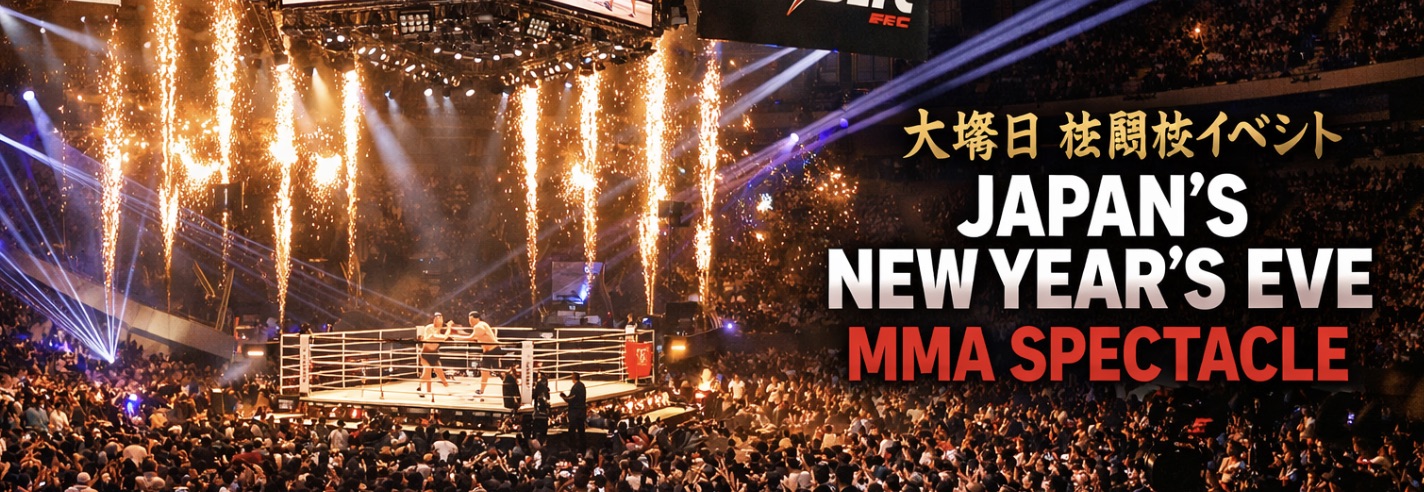
Why Japan’s New Year’s Eve MMA shows hit different
If you’ve followed combat sports long enough, you know Japan treats New Year’s Eve like a national fight holiday. It’s not just “another card” — it’s the annual moment when the entire scene tries to outdo itself with stakes, spectacle, and matchups that feel designed for the biggest possible audience.
Former RIZIN announcer Joe Ferraro once compared the importance of this tradition to the Super Bowl: not only for the fights, but for the cultural pull and the advertising spotlight that comes with it. That idea has basically defined the blueprint for decades: build the year toward one massive night, then deliver.
From pride fc to rizin ff at Saitama Super Arena
Long before ufc became the global machine it is today, pride fc helped turn Saitama Super Arena into the symbolic home of New Year’s Eve MMA — tournaments, superstar fights, and the kind of atmosphere you just don’t get on a random weekend.
rizin ff revived that same feeling in 2015 and has kept the “end-of-year mega show” identity alive ever since. This year’s centerpiece is RIZIN Shiwasu: no Cho Tsuwamono Matsuri (new years event), and the card is stacked in a way that screams “we saved the best for last.”
Shiwasu Matsuri 2025: the fights that define the night
Featherweight title fight in the main event
The headline story is Fight: Shaydullaev vs. Asakura, with star power on both sides: Mikuru Asakura vs. champion Razhabali Shaydullaev. It’s the kind of matchup that makes sense specifically on New Year’s Eve — risk, pressure, and the biggest stage possible.
Lightweight championship update
The other key title storyline is Fight: de Souza vs. Nazimov, pairing champ Roberto de Souza (satoshi) with dangerous challenger Ilkhom Nazimov. On a night built for shocks, that’s exactly the kind of fight that can swing the whole event.
Flyweight Grand Prix final for a vacant belt
And then there’s the flyweight centerpiece: Fight: Motoya vs. Ougikubo, featuring veteran finisher Hiromasa Ougikubo against the always-game Yuki Motoya. The division has history too — Kyoji Horiguchi previously vacated the title before heading back to the ufc, so this is a real “new era” moment.
How RIZIN schedules a whole year around one night
Ferraro’s point about Japanese promotions “stacking” New Year’s Eve cards isn’t just talk — it’s a strategy. You run tournaments, build contenders, and time big announcements so the finales land on December 31. That’s how you end up with a card that feels like a season finale instead of a standard event.
The RIZIN pipeline: names that carried momentum worldwide
Another reason this tradition matters is what it produces. Kai Asakura became one of the faces of the modern era. Jiří Procházka used Japan as a launchpad before conquering bigger stages. Vadim Nemkov went on to world-title success elsewhere. Even heavyweight storylines like Ryan Bader vs. Alexander Soldatkin show how RIZIN tries to frame “global” stakes, even when plans change.
That’s the point of New Year’s Eve MMA in Japan: history, pressure, and an entire year funneled into one night where reputations can shift fast.